
Common Digital Signage Traps and How to Get the Best ROI
When you walk through a modern building today, you see screens in lobbies and elevators. Despite the high volume of property management companies now investing in tech, many of these systems underperform. We often see properties where elevator digital signage has been installed, but it’s showing outdated weather widgets or blurry PDFs from last month.
For property owners, this isn't just an aesthetic issue; it’s a missed opportunity to build tenant trust and improve communication. Whether you are currently in the middle of an elevator modernization project or just looking to improve your building’s engagement, getting the strategy right is the difference between a high-tech asset and an expensive distraction.
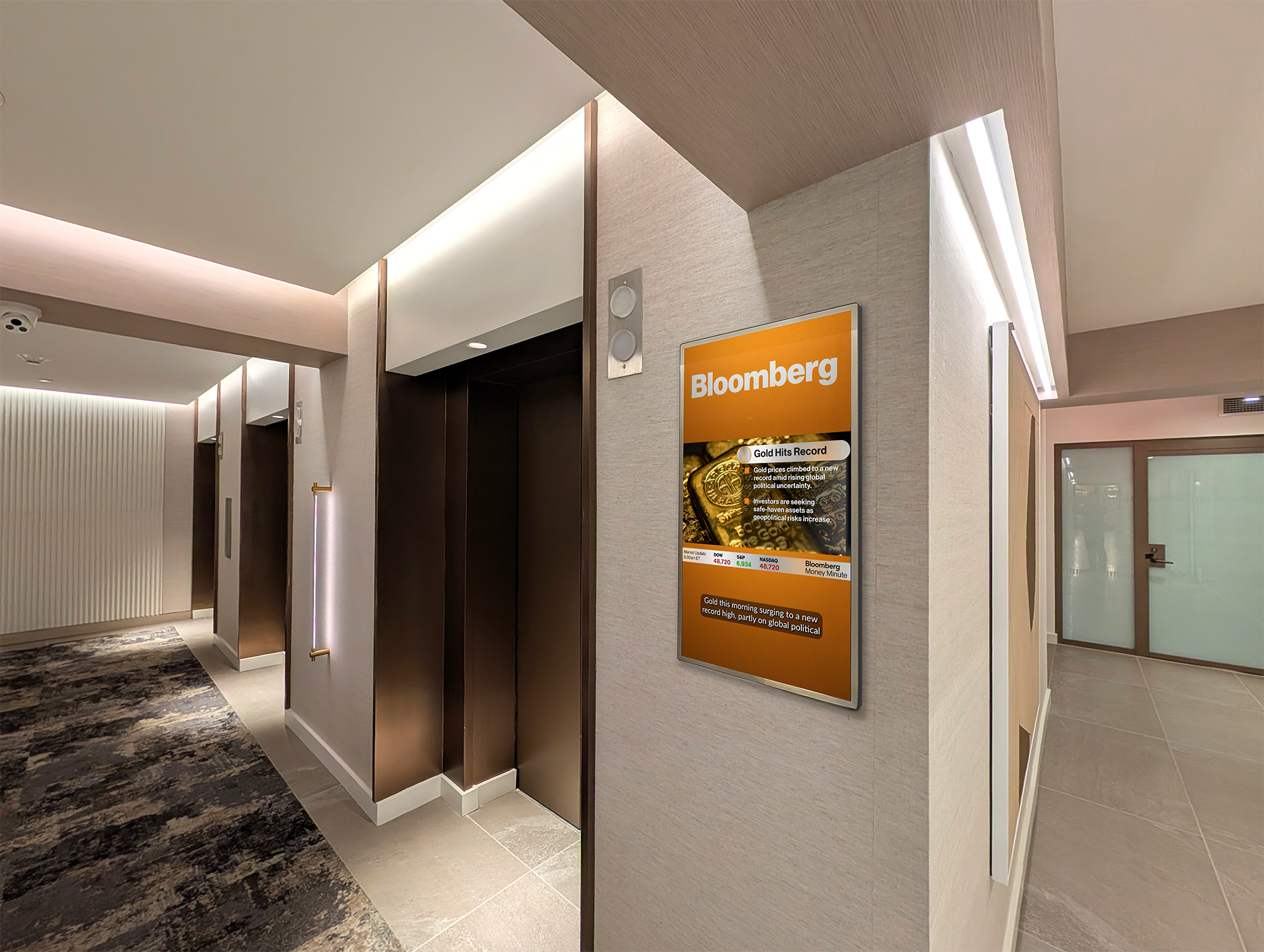
The Hardware Only Mindset
A frequent mistake is approaching signage as a "set it and forget it" hardware project. Property owners often focus solely on the screen brand and the mounting bracket, and while hardware quality is important, it shouldn't be the end of the conversation. If you are going to invest in hardware, it needs to be smart enough to send its health vitals and receive remote updates. Without that connectivity, just hanging a TV on a wall.
The real value lies in the communication platform. When content becomes stagnant or repetitive, tenants stop looking at it entirely, and your expensive digital investment essentially becomes wallpaper.
How to Get it Right with 70/30 Content Strategy
Leading companies for property management avoid this by using a balanced content mix. We recommend the 70/30 rule: 70% of your screen time should be high-value engagement content (curated news, local weather, and lifestyle updates) to earn the tenant’s attention. The remaining 30% is reserved for your functional announcements (building updates and maintenance alerts). This balance ensures that when you have a critical message to share, your audience is already in the habit of looking at the screen.
Logistics Phobia and the Missed Modernization Window
Many property managers hesitate to pull the trigger on digital signage because they fear the downtime. They worry that installing screens will disrupt residents and add another layer of mechanical stress to the building. This logistics phobia is often a reality when working with conventional companies that rely on outdated technology and unspecialized staff.
-
Modern deployments shouldn't be a multi-day ordeal. With the right team, a full cab installation can be completed in under two hours during a low-traffic window. The most strategic way to handle this is through a lock-step approach with minimal involvement of your elevator service company.
-
A major inefficiency we see involves running signage as a standalone silo. Many companies for property management operate their screens separately from their core building systems. This means every time there is a water shutdown, a holiday schedule change, or a maintenance alert, a staff member has to manually upload a file to a separate portal.
Automating the Property Management Workflow
In a modern building, your communication should be an extension of your existing workflow. By integrating your digital signage directly with your property management systems, you eliminate the "manual update" headache.
When a maintenance alert is logged in your management tool, it should automatically trigger a visual announcement on every screen in the building. This hands-off approach ensures 100% accuracy and real-time safety updates without adding a single task to your team's to-do list.
Final Thought
Digital signage isn't just about hardware; it's an operational asset. When you avoid the traps of poor timing and manual management, you turn a simple screen into a powerful tool for tenant retention and building performance.